

Uneven lawn color does not always mean the entire yard needs more water. An irrigation review should check coverage, leaks, soil moisture and plant needs before increasing every zone’s runtime.
Watch each irrigation zone operate
Run a supervised system check and look for heads that are blocked, broken or aimed at a driveway. Compare dry patches with the sprinkler pattern. Note unusually wet areas, water continuing after a zone stops and any obvious pressure change. These observations help distinguish a coverage problem from a broad watering need.
Keep a simple record of zone locations and what each zone serves. Grass, shrubs and new plantings may need different care. UGA’s Georgia Green landscape guidance supports adjusting irrigation for moisture and rainfall, repairing leaks and avoiding water on paved surfaces.
Review the controller and the plants together
A timer is only useful when its settings fit the landscape. Look for duplicate programs, an outdated seasonal schedule or a rain sensor that needs attention. Review new plantings separately from established ones, and account for rainfall rather than letting the calendar alone decide.
- Which zones serve lawns, beds or newly installed plants?
- Does the system reach the full planted area?
- Are fixtures or vegetation blocking the spray pattern?
- Are controls and sensors functioning as intended?
- Is runoff occurring before the watering cycle finishes?
Specific watering amounts depend on the turf, soil, weather and stage of establishment. Confirm current local watering requirements before programming the system; this guide does not substitute for those rules.
Plan irrigation when the landscape changes
A new patio, retaining wall or planting bed can alter the area an existing zone needs to cover. Include irrigation adjustments in the construction scope instead of discovering afterward that a sprinkler now waters the pavers. Underground routes and future access should be considered before finished surfaces are installed.
Executive Green’s landscape and irrigation services can be discussed alongside sod, planting and outdoor-living work. For an existing system, identify whether your requested scope is an inspection, a design change or installation; repairs and component costs should be clear in the proposal.
Think about lawn and bed zones together
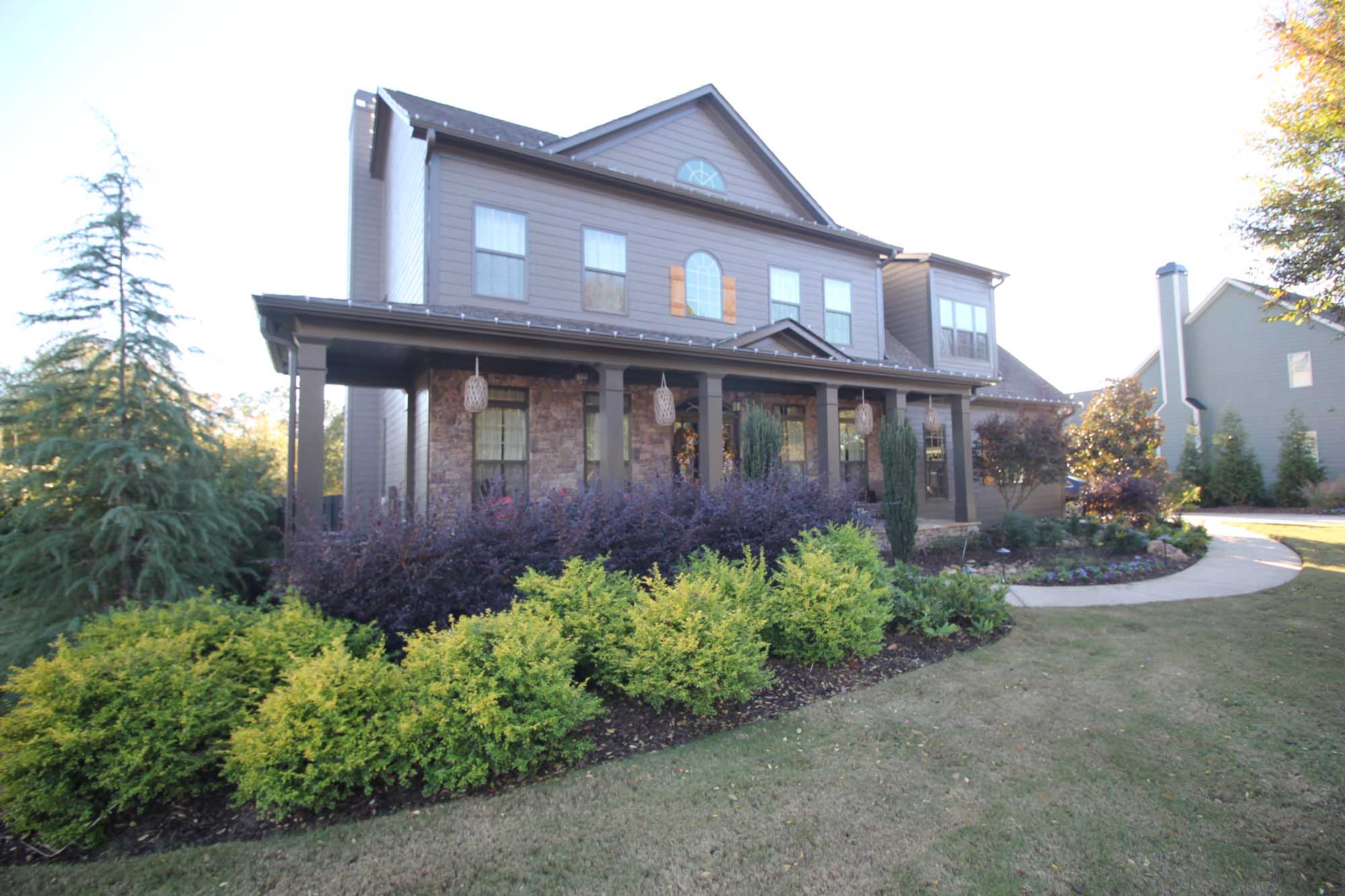
The Treiber portfolio shows lawn, planting and hardscape areas in one property. Use it to discuss landscape organization; the photos do not document the irrigation system beneath the surface.
Common questions
Should I increase watering if one part of the lawn is brown?
Check that area’s coverage, soil moisture and growing conditions first. More water across the entire lawn can create wet spots without fixing the original issue.
Can lawns and planting beds share a zone?
The design should account for different water needs and equipment. An assessment can identify whether the existing arrangement is practical or should change.
When should irrigation be checked?
Review it when the growing season changes, after landscape construction and whenever you see uneven coverage, leaks or persistent wet areas.
Related planning guides
Continue planning with Sod Installation in Athens: Prepare the Site Before Choosing the Grass and Fall Landscape Maintenance in Metro Atlanta: Prioritize Water, Access and Care.
Discuss a landscape irrigation assessment
Executive Green designs, builds and maintains landscapes in Watkinsville, Athens, Buford and Metro Atlanta. Request an on-site project assessment or call (404) 558-0839. Share your location, a few property photos and the outcome you want so we can discuss the right scope for your space.