
The right yard drainage solution starts with where water comes from, where it collects and where it can leave safely. For Watkinsville and Athens properties, a drain, grading change or planted area should be selected after a site assessment, rather than treated as a universal fix.
Follow the water during and after rain
A muddy low spot is the symptom. Roof runoff, a driveway, compacted soil or a change in grade may be the source. Take photos from a safe location during rain and again afterward. Record which area becomes wet first, how long it stays wet and whether water crosses a patio or approaches the house. These observations are more useful than a photo taken only on a dry day.
Check visible gutter outlets and surface inlets for debris without entering flowing water or digging around utilities. Tell the contractor about previous repairs, buried pipes and irrigation lines. A new surface finish should wait until the underlying water problem is understood.
Match the solution to the problem
- Surface runoff: A grading adjustment, swale or collection inlet may help guide water toward a suitable outlet.
- Saturated soil: Subsurface drainage may be appropriate where site conditions and a workable discharge point support it.
- Eroding slope: Ground cover, erosion-control measures or a retaining-wall system may be part of a larger plan.
- Blocked flow: Cleaning or repairing an existing system may be more appropriate than building another one.
Water must not simply be shifted onto a neighboring property. Discuss discharge, property boundaries and applicable approvals during design. Structural or foundation concerns may need a separate specialist.
Plan drainage before patios and new sod
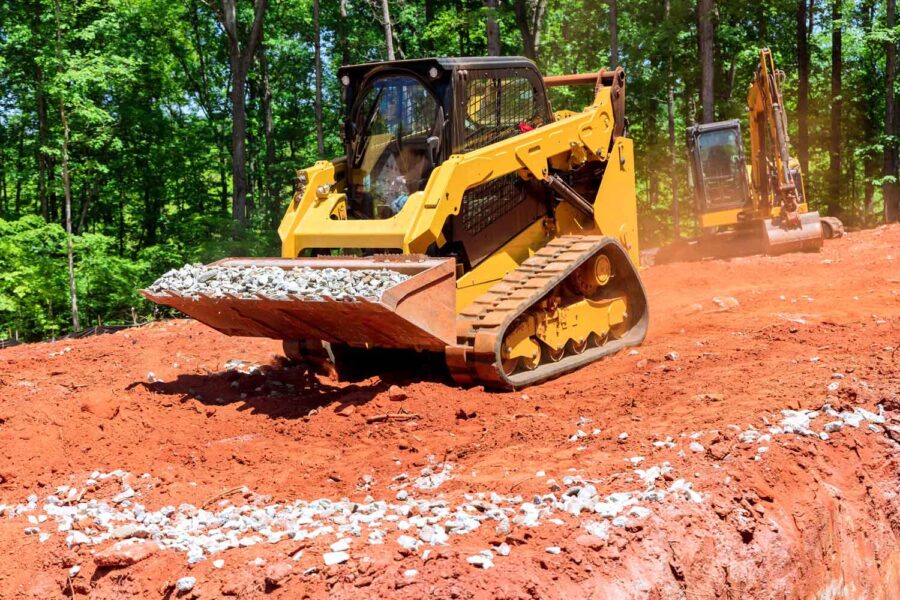
A patio changes the way water moves. New sod can cover a low area without correcting it. Bring drainage, hardscape elevations and planting plans into the same conversation so each element supports the others. Executive Green’s residential services include grading, drainage and erosion control alongside landscape construction.
Ask for a scope that identifies the collection area, intended flow path, outlet, disturbed areas and restoration. Also ask how the finished system will be inspected and maintained. Leaves and sediment can reduce the performance of an otherwise well-planned installation.
See a landscape project in context
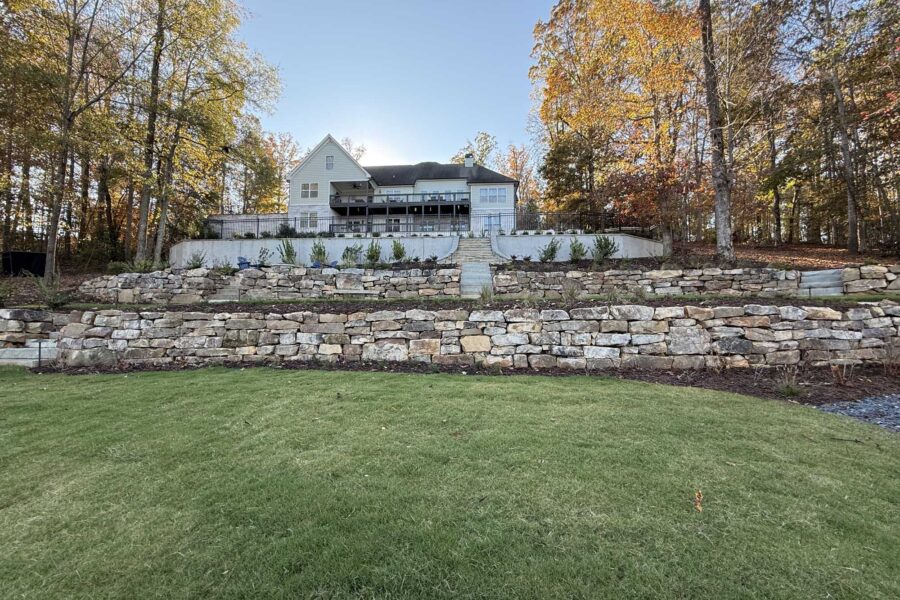
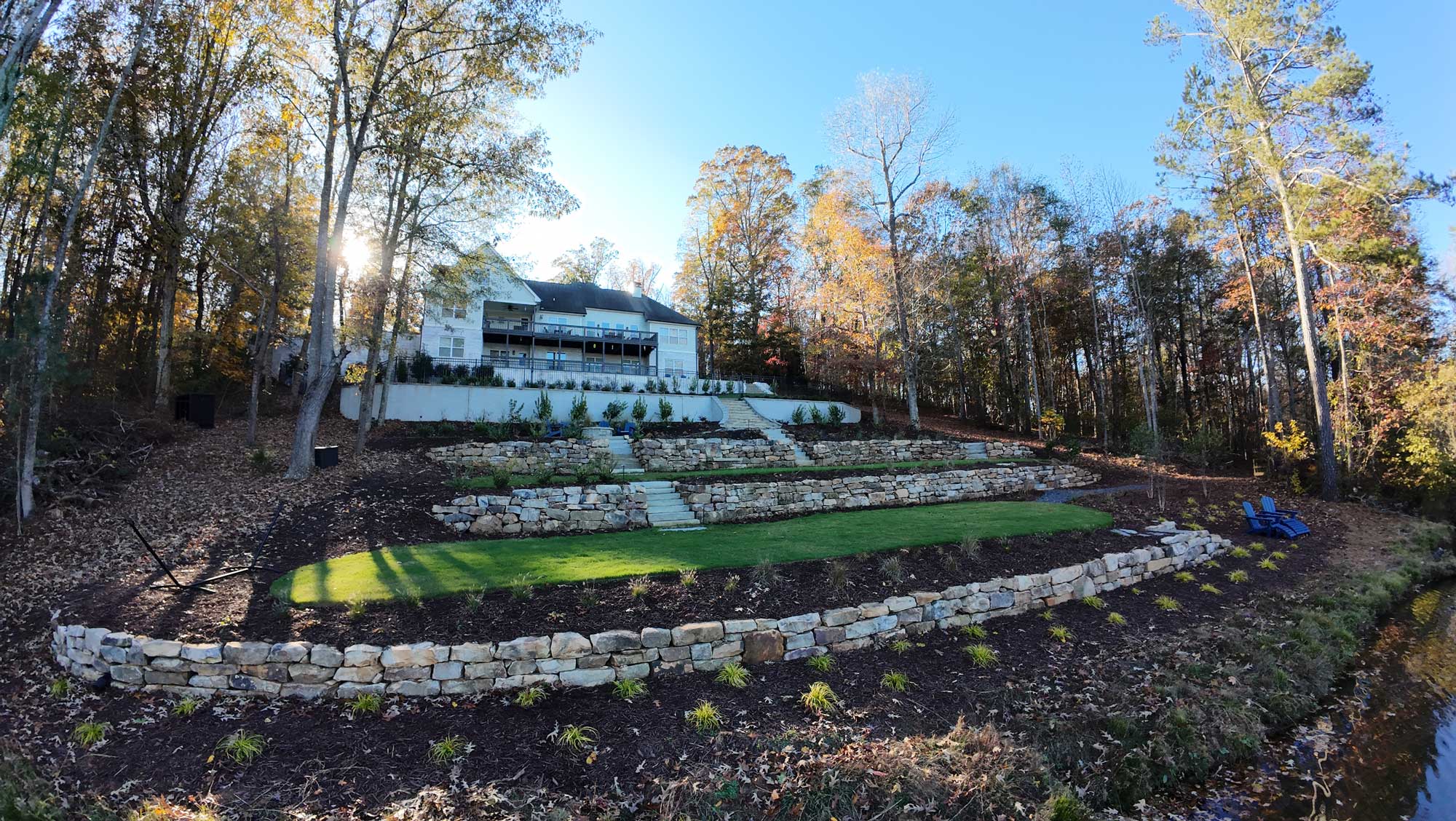
The Pappas portfolio project shows retaining walls and a finished backyard. Use it for layout ideas, while recognizing that your drainage design must be based on your own property. Explore retaining-wall services if grade changes are part of the plan.
Common questions
Will a French drain fix any wet yard?
No. It is one tool for particular water conditions. Surface flow, soil saturation and an unsuitable outlet can require different solutions.
Can a retaining wall replace drainage?
No. A wall retains soil, while drainage manages water. A wall design must consider both the site’s runoff and water behind the structure.
What should I send before an assessment?
Send your property location, wet-area photos, notes about rainfall and any known existing drains. Include your plans for a patio, lawn renovation or other construction.
Related planning guides
Continue planning with Sod Installation in Athens: Prepare the Site Before Choosing the Grass and Pool Landscaping in Watkinsville: Connect the Deck, Yard and Planting.
Get a plan for your wet yard
Executive Green designs, builds and maintains landscapes in Watkinsville, Athens, Buford and Metro Atlanta. Request an on-site project assessment or call (404) 558-0839. Share your location, a few property photos and the outcome you want so we can discuss the right scope for your space.