

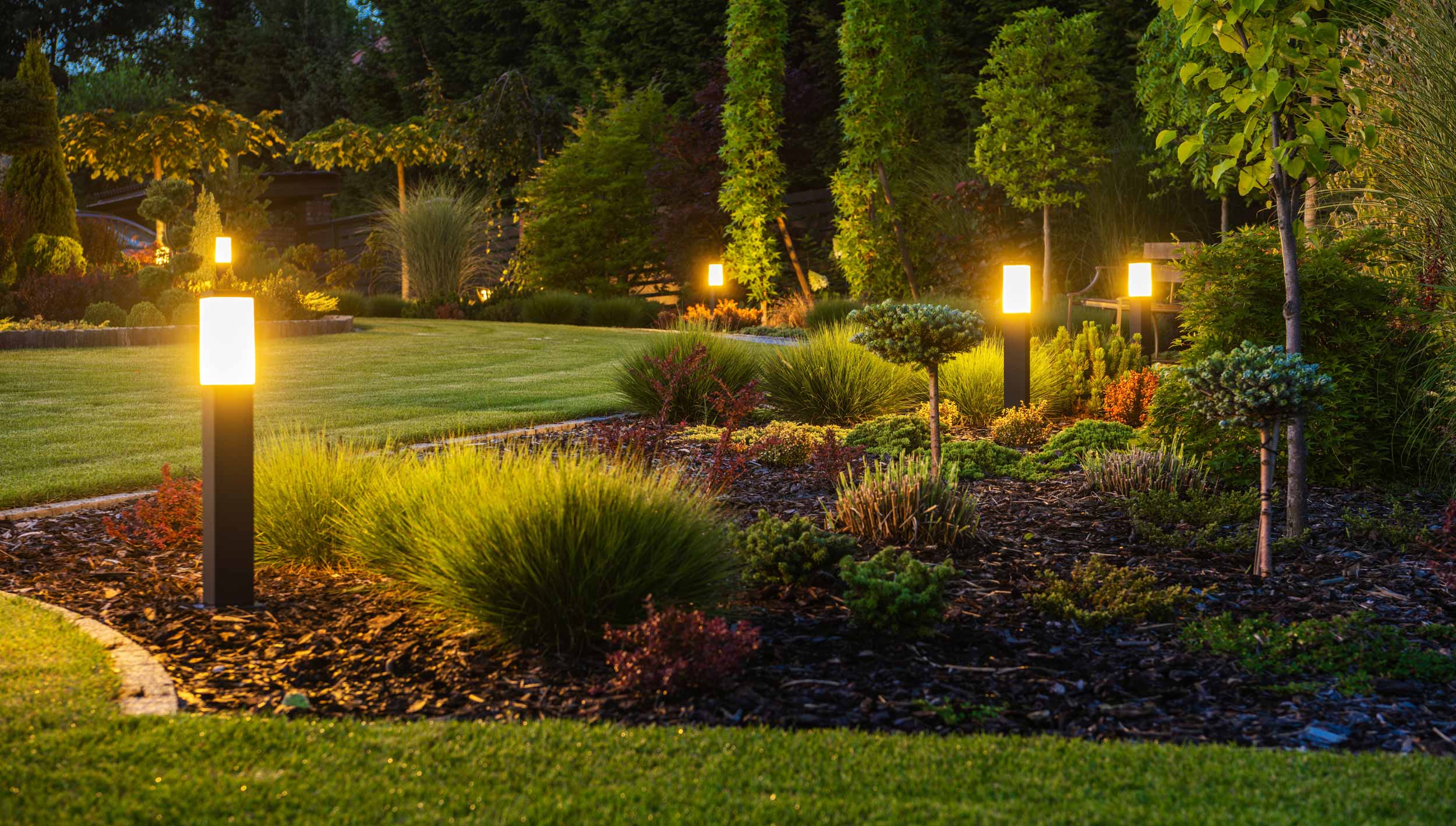
A useful landscape lighting plan begins with the routes people take after dark, then adds selected accents. For Buford and Metro Atlanta homes, lighting should make the outdoor space easier to use while avoiding glare and unnecessary spill.
Walk the property after dark
Start at the driveway or parking area and follow the normal route to the door, patio and yard. Note steps, changes in grade, narrow passages and places where existing fixtures shine into your eyes. A nighttime review often reveals a different priority than a daytime design.
Think about what you see from indoor windows and from neighboring properties. A fixture aimed at a tree can also throw light toward a bedroom. Describe the effect you want, such as a comfortable path or a gently lit seating area, instead of beginning with the largest possible fixture count.
Use layers and selective placement
- Paths and steps: Make important transitions visible without lining every edge with identical lights.
- Outdoor living: Provide comfortable illumination for conversation, dining and movement.
- Landscape accents: Select a few trees, walls or planting features rather than illuminating everything equally.
- Controls: Discuss timers, schedules and separate zones where the system supports them.
Ask to review fixture direction and brightness after installation. LED technology alone does not guarantee a comfortable result; placement and aiming are essential. Plant growth can also change the effect over time.
Coordinate lighting with construction and future care
If a patio or walkway is being built, plan cable routes and future access before the surface is finished. Discuss power availability and the work that requires an appropriately qualified electrical professional. Do not assume a low-voltage landscape design covers every electrical connection.
Include fixture access, replaceable components and seasonal adjustments in the maintenance conversation. A fixture hidden behind a growing shrub may need attention later. Executive Green’s residential landscape services combine lighting with planting and outdoor-living design, so the plan can account for the whole property.
Plan the lighting around a complete outdoor space
Use the Treiber project to consider how paths, stonework and gathering areas connect. Its daytime photos help identify where a lighting conversation could begin; they are not presented as photographs of a lighting installation.
Common questions
Will more fixtures make my landscape look better?
Not necessarily. A few well-positioned fixtures can be more useful than a large number that create glare or compete for attention.
Can lighting be added to an existing landscape?
Yes, subject to access, power and the condition of the existing site. A review helps identify cable routes and any surfaces that would need to be disturbed.
Does landscape lighting need maintenance?
Yes. Check fixture alignment, obstructions, damaged components and control settings as plants grow and seasons change.
Related planning guides
Continue planning with Paver Patio Planning in Athens: Layout, Drainage and Everyday Use and Fire Pit and Outdoor Kitchen Planning in Athens: Start with the Layout.
Discuss lighting for your Buford property
Executive Green designs, builds and maintains landscapes in Watkinsville, Athens, Buford and Metro Atlanta. Request an on-site project assessment or call (404) 558-0839. Share your location, a few property photos and the outcome you want so we can discuss the right scope for your space.